
TikTok Affiliate Commission Rate Malaysia: Category Economics Explained
TikTok Affiliate Commission Rate Malaysia usually ranges from 5% to 20%, but that does not tell the full story. This guide explains how commission actually translates into real earnings.
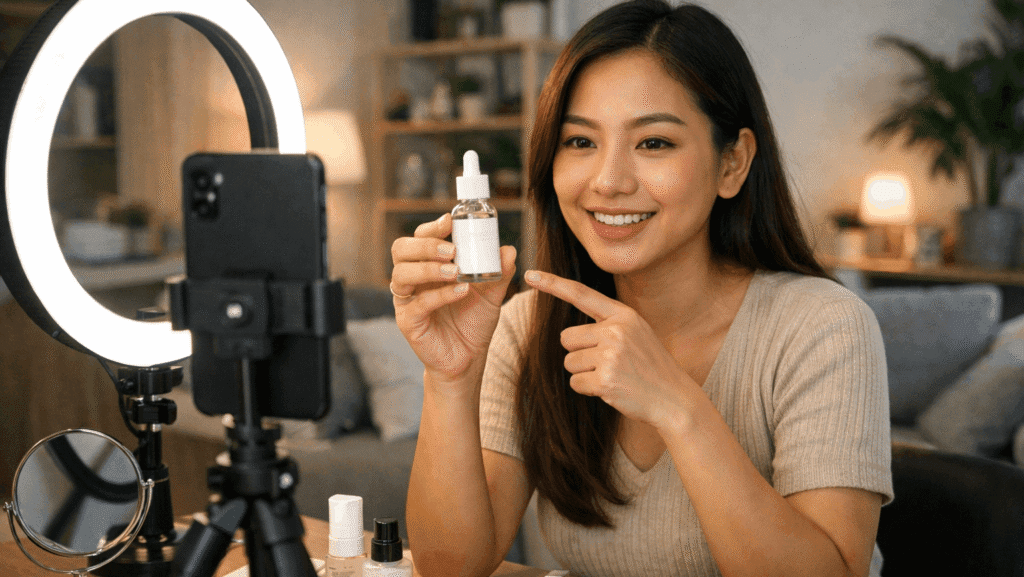
TikTok Affiliate Commission Rate Malaysia: What Really Impacts Your Earnings
Understanding the TikTok Affiliate Commission Rate Malaysia requires looking beyond the headline percentage.
In 2026, most commission rates range between 5% to 20%, depending on product category and seller strategy. Beauty and supplements often offer 15–20%, while electronics typically sit between 3–8%. But a higher percentage does not automatically mean higher income. Commission rate is only one layer of the equation.
Your real earnings depend on product price, conversion rate, competition intensity, and campaign stability. Many creators misunderstand this and chase percentages instead of understanding category economics.
Quick Summary: TikTok Affiliate Commission in Malaysia
- Typical commission range: 5%–20%
- High percentage does not equal high profit
- Electronics offer lower % but higher ticket size
- Campaign boosts are temporary
- Commission rates can change without warning
Standard Commission Ranges by Category
Understanding category differences is more important than chasing headline commission numbers. The structure of each category shapes income stability, conversion behavior, and long-term sustainability.
Beauty & Personal Care
Beauty products commonly offer 10%–20% commission, especially for new brands trying to gain traction. On paper, this looks attractive. However, competition is intense, and content fatigue is common.
Because of heavy creator participation, audience trust becomes harder to build. Conversion rates may drop over time as viewers see repeated product pushes across their feed.
High percentage. High saturation. Unstable long-term differentiation.
Tech & Electronics
Electronics typically offer 3%–8% commission, which looks low compared to beauty. However, average product prices range from RM150 to RM2,000. A single sale can generate meaningful earnings despite the lower percentage.
Tech products also attract high-intent buyers. Viewers actively search for reviews before purchasing, increasing conversion quality. The challenge is that tech buyers compare aggressively, so credibility matters more than volume.
Lower percentage. Higher ticket value. More research-driven buyers.
Household & Daily Use
Household items usually offer 5%–12% commission. Demand is steady because these are repeat-purchase categories. Products include kitchen tools, organizers, cleaning tools, and basic lifestyle accessories.
Conversion rates are generally stable, but average order value is moderate. Income scales through volume consistency rather than viral spikes.
Medium percentage. Moderate ticket size. Stable baseline income potential.
Supplements & Health
Supplements often provide 15%–20% commission or higher during promotional campaigns. Margins are strong because manufacturing costs are relatively low.
However, regulatory scrutiny and policy risk are significant. Platforms frequently update health-related advertising rules. Sellers may change formulas or compliance documents, affecting continuity.
High margin. Higher compliance risk. Campaign-dependent stability.
Percentage vs Profit: The Margin Illusion
Many creators compare commission percentages without calculating real profit per sale.
Consider this comparison:
- RM100 product at 10% commission = RM10 per sale
- RM20 product at 20% commission = RM4 per sale
The second option offers a higher percentage, but the first generates more income per conversion. Percentage alone is meaningless without ticket size context.
Volume also changes the equation. Lower-priced products require higher sales volume to match income from mid-ticket products. That means more content output, stronger hooks, and sustained consistency.
Conversion rate matters as well. Tech reviews may convert at 3–6%, while beauty impulse buys may convert at 1–3%. Category behavior directly affects earning logic.
A deeper breakdown of income tiers across different product economics is available in our analysis of realistic affiliate earning structures in Malaysia.
Campaign Commission vs Base Commission
Many sellers temporarily increase commission rates during campaigns. A beauty brand may raise commission from 12% to 20% for a seven-day sales period.
This creates income spikes. However, these spikes are rarely sustainable.
After the campaign ends, rates return to base levels. If your content system depends heavily on boosted commissions, income volatility becomes unavoidable.
Campaign commission is tactical. Base commission is structural.
Relying only on campaign spikes creates unstable income cycles. Creators who build repeatable systems focus on base economics first, then treat campaign boosts as temporary accelerators.
Commission Sustainability Risk
Commission rate is not guaranteed. Sellers can reduce rates at any time. Platform policies can shift unexpectedly. Categories can become saturated quickly.
Three key structural risks exist:
- Sellers may cut commission to protect margins.
- Platform policy changes can restrict certain categories.
- Increased creator participation reduces conversion efficiency.
This is why understanding TikTok Affiliate Malaysia as an ecosystem is more important than focusing on commission numbers alone.
A broader look at long-term income distribution across creators can be found in our detailed earnings breakdown for Malaysian TikTok affiliates.
Income volatility is not random. It is structural.
Malaysia Context: What Actually Scales?
In Malaysia, mid-ticket categories between RM80 to RM300 often produce more stable income patterns. These products balance affordability with meaningful per-sale commission.
Electronics accessories, lifestyle tools, and productivity devices perform better than ultra-low-priced impulse goods over time.
Creators who operate within structured product clusters tend to earn more consistently than those jumping across trending items weekly.
For a clearer view of how commission mechanics translate into monthly earning bands, refer to our analysis of average affiliate income patterns in Malaysia.
Scalability depends more on repeatable product positioning than on percentage headlines.
Key Factors That Affect Real Commission Earnings
Commission percentage is only one variable. Actual income depends on multiple interacting elements:
- Product price determines commission per sale.
- Conversion rate determines sales volume.
- Category competition affects reach and differentiation.
- Campaign dependency increases volatility.
- Audience trust influences long-term conversion consistency.
A 20% commission in a saturated category can underperform a 6% commission in a high-ticket niche with trust authority.
Commission rate is visible. Category economics are invisible. Most beginners focus on the wrong metric.
Conclusion : TikTok Affiliate Commission Rate Malaysia
The TikTok Affiliate Commission Rate Malaysia is realistic and functional within the 5%–20% range. However, it is structurally capped by category economics and platform volatility.
High percentages alone do not create scalable income. Mid-ticket products with stable demand offer better long-term earning logic. Campaign boosts should be treated as temporary accelerators, not core strategy.
TikTok Affiliate commission is a workable income mechanism, but it is not unlimited. It scales when paired with category positioning, repeatable content systems, and risk awareness.
Commission rate is one variable.
Your business model determines the outcome.

Miura Visual
Transforming visuals into content, stories, and scalable value across platforms and audiences.